
How Long a Roof Replacement Takes in NJ, Day by Day
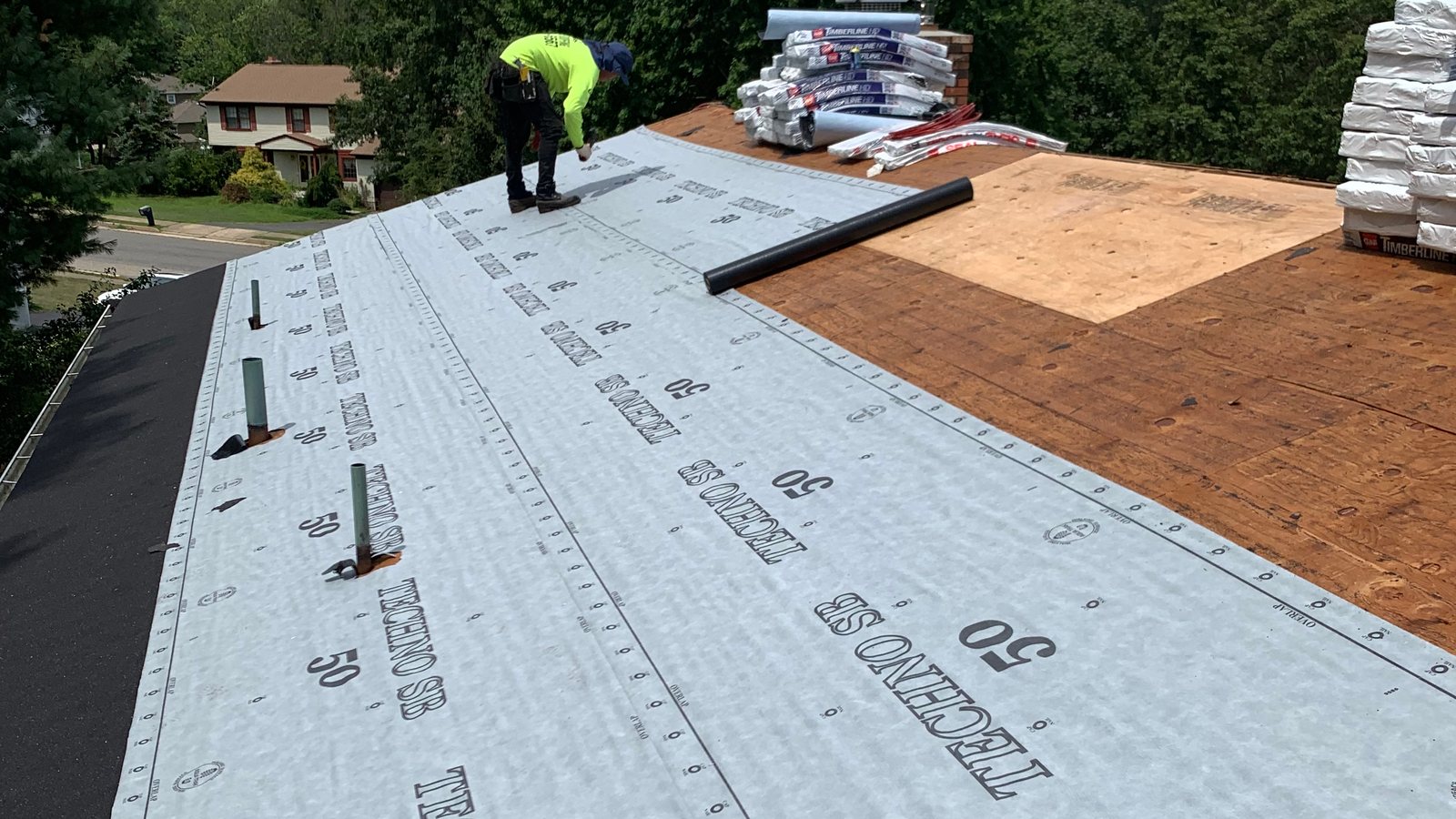
Short answer. On a typical single-family home in New Jersey, the work on the roof itself usually takes one to three days. The whole project, from signed contract to cleanup, usually runs a few weeks, because material delivery, the weather and the crew calendar set the schedule more than the work itself does. Larger, steeper or multi-layer roofs, rotted decking and rain all add time.
Before the crew arrives (usually one to a few weeks)
Estimate and contract. The roofer measures, checks the attic and decking, and gives you a written estimate. See what a real NJ roofing estimate should include.
Permit, or not. On a detached one- or two-family home, New Jersey's Uniform Construction Code lists "The repair or replacement of existing roof covering on detached one- and two-family dwellings" as ordinary maintenance (N.J.A.C. 5:23-2.7(c)1.x), and for ordinary maintenance "No permit for, inspections of, or notice to the enforcing agency" is required. That covers the shingles and the roof covering. Work that goes further, such as anything "affecting structural or fire safety" (5:23-2.7(b)4), other building types, or other trades, can need a permit. If your job includes structural repair, ask your roofer and the local construction office before work starts. See do you need a permit to replace a roof in NJ.
Materials. Shingles, underlayment, drip edge, flashing and vents are ordered in your chosen color. A delivery is usually dropped the day before or the morning of the job. See choosing shingles for an NJ roof.
Your prep: move cars out of the driveway, take fragile items off walls inside (hammering shakes them), cover things in the attic, and keep children and pets away from the work area.
Day 1: tear-off and deck repair
The crew sets up tarps and protection around the house, then strips the old shingles and underlayment down to the decking. With the deck exposed, they check every sheet. Soft or rotted decking is replaced. This is the moment surprises appear, and why good estimates show a per-sheet price for decking replacement. Read under the shingles: decking, underlayment and drip edge.
By the end of the day the deck is covered with underlayment, so the house is protected even if the roof is not finished.
Day 1 or 2: underlayment, ice barrier and drip edge
- Ice and water barrier along the eaves, in valleys and around penetrations. It matters in NJ winters; see ice dams in NJ.
- Synthetic underlayment over the rest of the deck.
- Drip edge at the eaves and rakes.
Day 1 to 3: shingles, flashing and ventilation
Starter strip, then shingles from the eaves up. Flashing goes in at walls, chimneys and skylights as the courses reach them. Pipe boots are replaced. Ridge vents and ridge cap shingles finish the top. Ventilation is part of the roof system, not an extra: read attic and roof ventilation.
Last day: cleanup and walk-through
Magnetic sweeps for nails across the lawn and driveway, gutters cleared of debris, dumpster removed. A walk-through with you, and photos of the finished roof. On a covering-only job on a detached house there is usually no town inspection to wait for; if your job did need a permit, the town's final inspection follows on its own schedule.
What a typical install day looks like
Every crew works a little differently, but most replacement days follow the same rhythm:
- Early morning: the crew arrives, sets up ladders, safety equipment and tarps around the house, and protects plants, windows and the driveway.
- Morning: tear-off begins on one slope at a time. Old shingles go into the dumpster or a trailer below.
- Midday: with the deck exposed, the crew checks and replaces any bad decking, then covers that slope with ice barrier and underlayment.
- Afternoon: drip edge, flashing and shingles go on, slope by slope.
- End of day: the roof is closed to weather, whether finished or not, and the yard is swept for nails.
On a bigger or more complex roof, the same cycle repeats over more days.
Winter installs in New Jersey
Replacing a roof in winter is possible, but it needs planning. Asphalt shingles have a sealant strip that bonds each shingle to the one below in warm sun; in cold weather that bond may not form until spring. Manufacturers publish cold-weather installation guidance, which can include hand-sealing shingles. Ice and snow on the deck must be cleared before underlayment goes down, and short days mean fewer working hours. Ask how your roofer handles cold-weather installs before you schedule.
After the crew leaves
Final inspection, if there was a permit. A covering-only replacement on a detached one- or two-family home is ordinary maintenance with no town inspection. If structural or other permitted work was part of the job, the town inspects that work under the permit; keep the permit card where the inspector can see it.
Warranty paperwork. Manufacturer warranties often need to be registered. Ask your roofer what has been registered and get copies; see are roofing warranties worth it.
Photos and records. Keep the contract, the invoice, any permit sign-off, the warranty and photos of the finished roof. You will need them if you sell the house or make an insurance claim.
The first big storm. Look at the ceilings and the attic after the first heavy rain. Any problem in the first weeks is a call to the installer, not a new contractor.
How to keep the schedule on track
- Sign and return paperwork promptly so materials can be ordered, and any permit filed if your job needs one.
- Pick your shingle color early; popular colors usually ship fastest.
- Clear the driveway and the area around the house the night before.
- Tell the crew about anything fragile in the attic or near the walls.
- Keep pets inside or away from the work area.
What makes it take longer
| Factor | Why it adds time |
|---|---|
| Rain or high wind | Work stops; the deck must be dry before underlayment |
| Two or more layers to remove | More tear-off and more debris |
| Rotted decking | Sheets to cut out and replace |
| Steep or complex roofs | Safety setup and slower work on slopes, valleys, dormers |
| Chimneys and skylights | More flashing detail |
| Permit and inspection backlog, only when structural or other permitted work is included | Set by the town, not the roofer |
| Color or product availability | Special-order shingles can delay the start |
Who controls each part of the timeline
| Stage | Who mostly sets the pace |
|---|---|
| Estimate and contract | You and the roofer |
| Permit, only if the job needs one | The town's construction office |
| Material order and delivery | The supplier, and how early you pick a color |
| Install days | The crew, and the weather |
| Final inspection, only if there was a permit | The town |
| Warranty registration | The roofer and the manufacturer |
Only one of those stages is mostly in the crew's hands. That is why two houses with the same size roof can have very different total timelines.
Why roof size and pitch change the schedule
Roofers measure a roof in squares. One square is 100 square feet of roof surface, so a roof with 2,000 square feet of surface is 20 squares. Because of slope and overhangs, the roof surface is larger than the floor area of the house under it. A crew plans its days in squares: how many it can tear off, dry in and shingle before the end of the day.
Pitch matters as much as size. On a low, walkable roof the crew moves freely. On a steep roof every worker is tied off, materials sit on roof jacks and planks, and each square takes longer. Dormers, valleys, chimneys and skylights add detail work that the square count does not show. That is why two roofs with the same number of squares can take a different number of days, and why a good estimate lists the pitch and the details along with the size.
The decking question, before you sign
Rotted decking is the one surprise that can add hours or a day once the old roof is off. Ask two things before you sign: how the per-sheet decking price is written in the contract, and how you will be told during the job if more sheets need replacing than expected. Knowing the answer in advance keeps the install day moving.
The best time of year to replace a roof in NJ
There is no bad season, only different trade-offs:
- Spring: mild temperatures help new shingles seal, but rain days can push dates.
- Summer: long, dry days. On the hottest afternoons shingles soften, so crews often start early.
- Fall: comfortable working weather and the last window before winter, so calendars often fill.
- Winter: possible on suitable days, with the cold-weather care described above.
If the roof is leaking now, the right time is as soon as the work can be scheduled safely. If it is aging but dry, booking ahead for spring or fall gives you the widest choice of dates.
Green Apple Roofing is a GAF Master Elite contractor and an NJ-registered Home Improvement Contractor #13VH11318100, serving Monmouth and Ocean counties from our Ocean Township office. Free roof survey, no obligation; we beat or match any legitimate quote. See roof replacement cost in NJ.
Questions homeowners ask
Request a commercial roof survey.
We'll survey your roof, tell you honestly whether it needs repair, recover, or replacement, and give you an itemized bid you can actually compare. Same-day phone response.