
Do I Need a Permit to Replace My Roof in NJ? Roof Permit Rules Explained
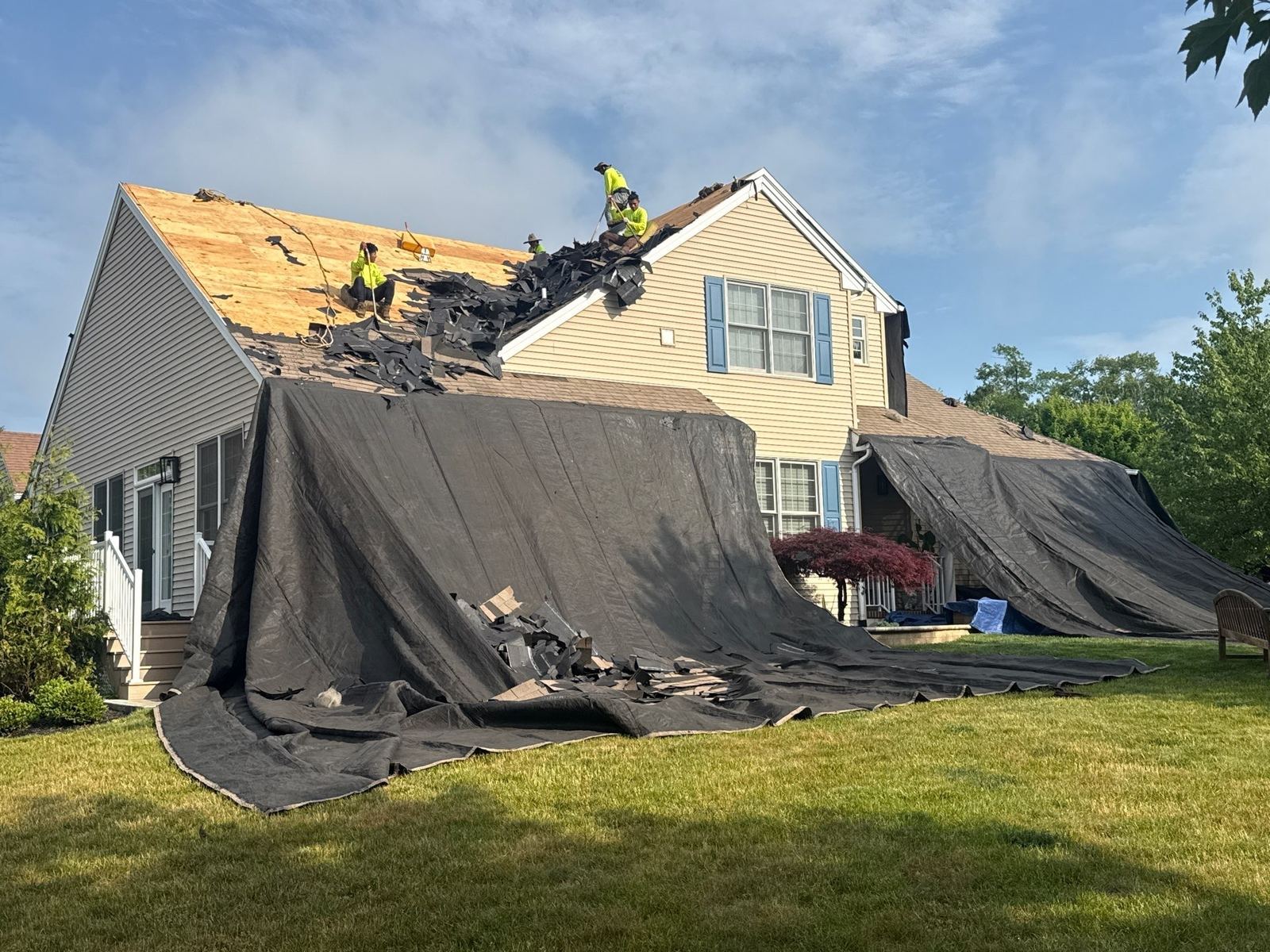
For most New Jersey houses, no roof permit is needed. Since March 5, 2018, New Jersey treats the repair or replacement of the roof covering on a detached one- or two-family home as ordinary maintenance: no construction permit or inspection is required, but the work must still meet code. Townhouses, multi-family and commercial roofs, and any work that affects the structure, still go through the permit process.
Green Apple Roofing is an NJ-registered Home Improvement Contractor (#13VH11318100), insured, and a GAF Master Elite® contractor, founded in 2008, with one office in Ocean Township. This page sets out what the state rule says, where it stops, and what still applies when no permit is pulled.
What the rule says, as of October 2026
The rule is the state's "ordinary maintenance" list in the Uniform Construction Code, N.J.A.C. 5:23-2.7. Item (c)1.x on that list reads: "The repair or replacement of existing roof covering on detached one- and two-family dwellings." And for anything on the list, the regulation says: "No permit for, inspections of, or notice to the enforcing agency of ordinary maintenance shall be required."
The Department of Community Affairs spelled out the scope in its March 2018 alert: "The repair or replacement (including total replacement) of any amount of existing roof covering on detached one‐ or two‐family dwellings." That is the position as of October 2026. This is general information, not legal advice; your local construction office has the final word.

What "no permit" changes for you
On a detached house, the rule saves you a filing, a fee and a wait for an inspection slot. It also removes the one outside check on the job. With a permit, someone from the town looks at the work. Without one, nobody does unless you arrange it.
So the useful way to read the rule is this: the paperwork moved off the town's desk and onto yours. The code items still have to be done. The estimate is where you can see whether they will be, and the contractor's registration is how you know who stands behind them. The rest of this page is about those two things.
Which roofs still need a permit
The exemption is narrow on purpose. It names one kind of building and one kind of work. Outside it, the normal permit process applies:
- Townhouses. The rule says detached. An attached home is not on the list.
- Multi-family buildings with more than two units.
- Commercial roofs. The 2018 rule names only detached one- and two-family dwellings.
- Work that affects the structure. The same regulation says ordinary maintenance does not include "The removal or cutting of any structural beam or bearing support" or "Any work affecting structural or fire safety".
Decking is the gray area homeowners ask about most, and no state line names it. The safe reading: work that affects the structure needs a permit; ask your local construction office. If damaged framing turns up once the old roof is off, that is the point to stop and call.
Chimneys are the other one. Rebuilding a chimney is not on New Jersey's list of permit-free 'ordinary maintenance' work. The only chimney item on that list is applying a liquid lining inside an existing chimney. Ask your local construction office before a rebuild.
Six common jobs, and where each one lands
Most questions we hear are one of these. The answer turns on two things only: what kind of building it is, and whether the work goes beyond the roof covering.
| The job | Permit? | What still applies |
|---|---|---|
| Full shingle replacement on a detached single-family house | No — ordinary maintenance | Code: drip edge, tear-off rules, everything else in the residential code |
| Repairing one section of a detached two-family house | No — ordinary maintenance | Code; no 25 percent limit since 2018 |
| Detached house with two layers already on it | No — but it is a tear-off | Both layers come off before the new roof goes on |
| Re-roofing a townhouse | Yes | The permit process, plus code |
| Re-roofing a commercial or multi-family building | Yes | The permit process, plus the building code |
| A re-roof that turns into structural work | Yes, for the structural part | Ask the construction office before that work starts |
The last row is the one that catches people mid-job. The roof covering comes off, and what is underneath is not what anyone expected. The permit-free rule covered the covering. It does not stretch to a "structural beam or bearing support", and the moment the work touches one, the job is back in the permit process.
Commercial roofs: the permit and the drains
The 2018 rule names only detached one- and two-family dwellings, so a commercial re-roof goes through the permit process. Drainage is one of the items that comes up, and the rules differ for new and existing buildings.
As of October 2026, New Jersey's building code (the 2024 International Building Code, Section 1502.2, adopted effective August 17, 2026) requires secondary (emergency overflow) drains or scuppers on new buildings where a flat roof has drains and a parapet that would trap water if the drains clogged. Work on existing buildings, including a re-roof, falls under the state's Rehabilitation Subcode (N.J.A.C. 5:23-6.8), which does not apply that section.
So a re-roof in New Jersey is not required to add overflows. It also may not reduce existing system capacity below what exists or what the code requires, whichever is lower (N.J.A.C. 5:23-6.4(c) and 6.5(c)). Building owners can read more on our commercial roofing page.
No permit does not mean no code
The DCA alert is blunt about it: "The classification of work as ordinary maintenance is not a waiver from code compliance; all work is required to meet code requirements." Nobody from the town inspects a permit-free re-roof, so the code is only as good as the crew that follows it.
The code itself just changed. New Jersey adopted the 2024 International Residential Code effective August 17, 2026, with a six-month grace period (DCA adoption notice). Three items from the code that show up on every shingle re-roof:
- Drip edge. The residential code requires drip edge at the eaves and rakes of shingle roofs, overlapped at least 2 inches and nailed no more than 12 inches apart.
- Tear-off. In New Jersey, the existing roof covering must be removed before a new one goes on when it is water-soaked or has deteriorated to the point that it is not adequate as a base for additional roofing, when it is wood shake, slate, clay, cement or asbestos-cement tile, or when it already has two or more layers (N.J.A.C. 5:23-6.4).
- Ice barrier. New Jersey's code trigger for it covers Sussex County only (DCA Bulletin 07-3). Elsewhere the code does not require it, so ask whether the estimate includes ice and water protection along the eaves.
A written estimate for a residential roof should name each of these. If one is missing, ask why before you sign — the checklist in what a real NJ roofing estimate should include covers the rest.
The old "25 percent limit" is gone
If you have heard that only a quarter of a roof can be done without a permit, that was true once. Before March 5, 2018, New Jersey limited how much roofing could be replaced without a permit (the '25 percent limit'). The 2018 rule removed that limit for detached one- and two-family homes. Municipal building officials petitioned to restore it in 2019, and the state refused (DCA petition response).
What that means when only part of a roof needs work is covered on our roof repair page.
Permit or not, the contractor must be registered
The 2018 change was about permits, not about who may do the work. Home improvement contractors must still register with the state every year and carry insurance. So the question to ask any roofer is: what is your state registration number? Ask for it on the estimate, next to the company's name and address, and check it matches the business you are paying. Ours is #13VH11318100.
This is a state rule, so it reads the same in Ocean Township as in Toms River. What differs is who answers the phone: questions about a specific job go to your municipality's construction office.
Before you sign: five questions
- Is the house a detached one- or two-family home? If not, plan for a permit.
- Is any structural work planned, or could it become necessary once the old roof is off? If so, ask the construction office first.
- How many layers are on the roof now? Two or more means a tear-off.
- Does the estimate name the code items: drip edge, tear-off, and ice and water protection where it goes?
- What is the contractor's state registration number?
Not sure which side of the rule your roof is on?
Tell us the building type, how many layers are on it and what you want done. Same-day estimates by phone. Veteran and first-responder discount — mention it when you book. We'll beat or match any reliable, legitimate roofing, siding or gutter quote. Call (201) 681-0060 or get in touch.
Residential Roofing questions, answered.
Request a commercial roof survey.
We'll survey your roof, tell you honestly whether it needs repair, recover, or replacement, and give you an itemized bid you can actually compare. Same-day phone response.