
Recover or Tear Off: When a New Membrane Can Go Over an Old Commercial Roof in NJ
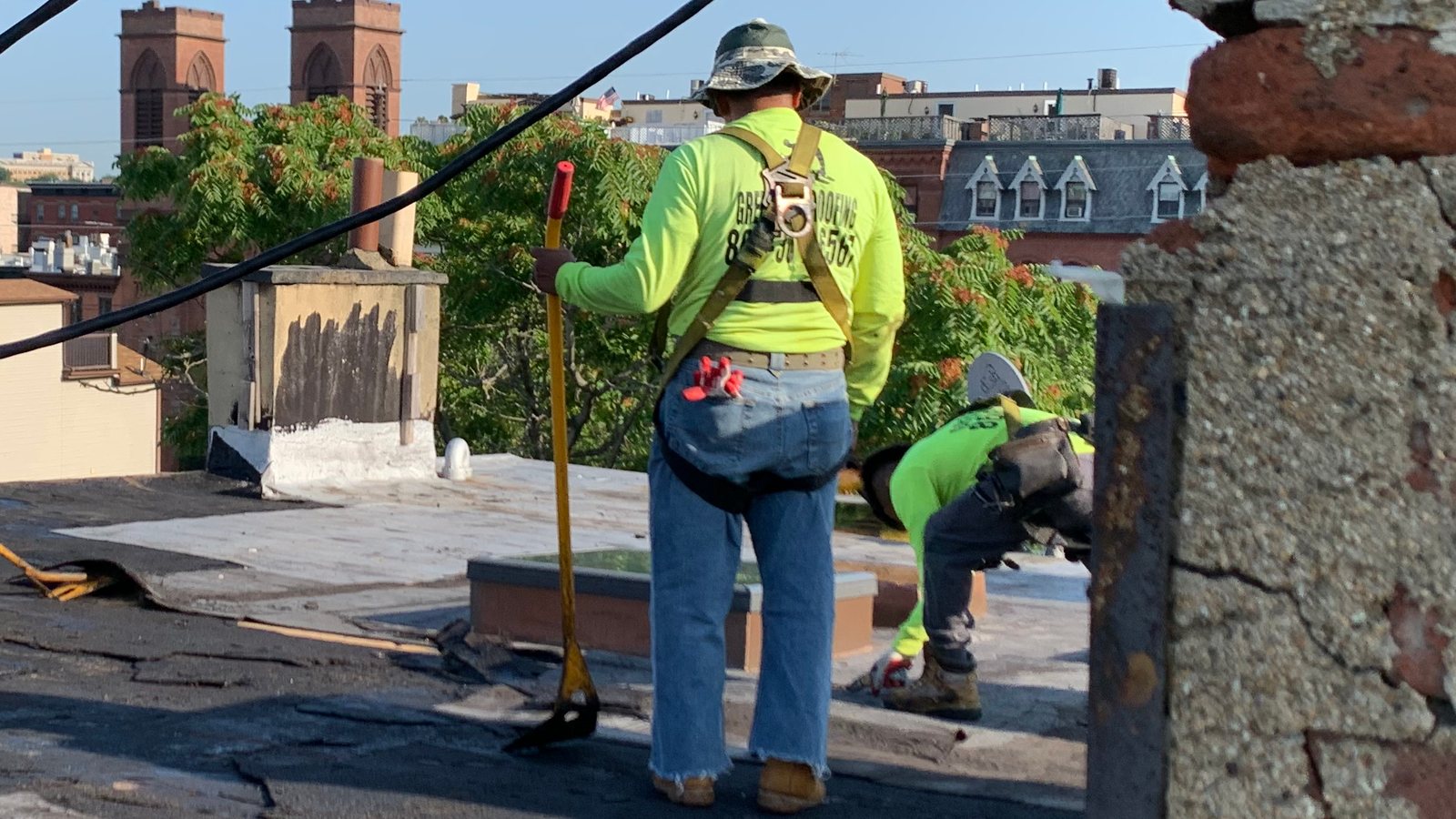
Short answer. A recover puts a new membrane over the existing commercial roof; a tear-off removes the old roof down to the deck first. A recover can save time and disposal cost, but only when the existing roof and insulation are dry, the deck is sound, there is only one existing roof layer, and the building code and new warranty allow it. A moisture survey and core cuts decide.
Two ways to replace a commercial flat roof
When a commercial flat roof in New Jersey reaches the end of its life, the owner usually has two choices:
- Recover (overlay). The existing membrane stays in place. A cover board or new insulation goes over it, then a new membrane such as TPO is installed on top.
- Tear-off (full replacement). The existing membrane, insulation and anything else above the deck is removed. The deck is inspected and repaired, then a new insulation package and membrane are installed.
A third option, restoration with a coating, can fit roofs that are still sound but aging. It is not a replacement, and it is not covered here. See commercial roof repair vs replace.
On a large building this decision is often worth tens of thousands of dollars either way, which is why it deserves more than a quick look from the ground.
When a recover can make sense
A recover is worth considering when all of these are true:
- The existing roof and insulation are dry. Wet insulation under a new membrane stays wet. It loses its insulating value, adds weight, and can rot a wood deck or rust a steel one.
- There is only one existing roof. Building codes limit how many layers a roof can have. A building that has already been recovered once usually needs a tear-off.
- The deck is sound. No rusted-through steel, no rotted wood, no deflection that holds water.
- The structure can carry the extra weight. A recover adds the weight of new materials on top of the old ones.
- The drainage and edge heights still work. Added thickness raises the roof surface. Drains, scuppers, door thresholds, curbs and parapet flashing heights all have to be checked.
- The manufacturer will warrant it. Membrane manufacturers have rules for what they will warrant over an existing roof.
When it has to be a tear-off
- A moisture survey or core cuts show wet insulation across a large part of the roof.
- The roof has already been recovered once.
- The deck is damaged or corroded.
- Ponding water has deformed the roof or the insulation. See ponding water on a flat roof.
- The added height would break the flashing at walls, curbs and doorways.
- The owner wants a full new insulation package to meet current energy requirements.
How we find out what is under the old roof
Moisture survey
Wet insulation does not show from the surface. A moisture survey maps where it is wet. Methods include infrared scans (often done in the evening, as the roof releases stored heat), electrical impedance or capacitance meters, and nuclear moisture gauges. Each has limits; the survey shows where to cut.
Core cuts
Small samples are cut from the roof to see each layer: membrane, cover board, insulation, any old roof underneath, and the deck. Core cuts confirm how many layers exist, how thick the insulation is, and whether it is wet. Each cut is patched the same day.
Deck check
From inside the building, the underside of a steel or wood deck shows rust, staining or sagging that the roof surface hides.
Together these turn a guess into a plan. A recover based on a guess is the most expensive mistake in commercial roofing: it buries a wet roof under a new one.
Cost: what changes between recover and tear-off
Where a recover saves money:
- Less labor to remove the old roof.
- Lower disposal cost; less debris hauled.
- Less risk of rain getting in during the job, because the building stays covered.
- Often a shorter schedule.
Where a tear-off pays back:
- Wet insulation is gone and replaced, restoring energy performance.
- Deck problems are found and fixed.
- The new roof starts from a known condition, which matters for the warranty.
- Future replacement is easier, because there is only one layer to remove.
For the overall numbers, read commercial flat roof replacement cost in NJ. Whoever you hire, ask for an estimate that lists the removal, insulation and membrane work as separate lines, so you can compare the two approaches line by line. See what a real NJ roofing estimate should include.
Warranty: read the fine print
Manufacturer warranties for single-ply membranes have conditions for installation over an existing roof: the existing roof must be dry, the right cover board or separator must be used, and the fastening pattern must match the specification. A recover that does not meet those conditions can void or limit the warranty. See commercial roof warranties: what each type covers and what voids one.
How a recover is built
When a recover is the right call, the typical build-up is:
- Remove loose gravel, failed flashings and any wet areas found by the survey, and replace them with new insulation.
- Install a cover board or new insulation over the existing membrane, fastened through to the deck.
- Install the new membrane, fully adhered or mechanically fastened as specified.
- Raise or replace flashings at walls, curbs, drains and edges for the new roof height.
- Replace edge metal and coping as needed. See where a flat roof actually drains.
For how a TPO membrane goes on, read how a TPO roof is installed.
Energy and insulation: the part owners forget
A recover keeps the existing insulation and adds whatever goes on top. A tear-off replaces it. That matters because insulation decides how much heat the building loses through the roof in winter and gains in summer. Wet insulation insulates poorly, so a roof that looks dry on top but holds water inside can be costing money every month.
When a roof is replaced, the new insulation package is usually designed to current energy requirements. On a recover, the added cover board or insulation counts toward that, but buried wet insulation does not. Ask the contractor to show the insulation value of each option in writing. For white membranes and summer cooling, read cool roofs for NJ commercial buildings.
Disruption to tenants and operations
Building owners also weigh what each option means for the people inside. A tear-off is noisier and dustier, and a section of roof is open each day until it is dried in. A recover is usually quieter and keeps the building covered. On an occupied building such as a warehouse, office or retail space, ask the contractor how each day will be sequenced, how rooftop equipment will be handled, and how the roof will be protected if weather turns.
Questions to ask any contractor before you choose
- Will you do a moisture survey and core cuts before you recommend a recover?
- How many roof layers are on the building now?
- What will the new roof height do to the drains, curbs, door thresholds and parapet flashings?
- Will the manufacturer warrant a recover on this building, and for how long?
- Can you show me the recover and tear-off options as separate line items?
Why owners in Monmouth and Ocean counties ask about this now
Many commercial buildings along the Jersey Shore have flat roofs installed in the same decades. As they reach the end of their life, owners face the same question at once, and winter is when hidden wet insulation shows up as leaks. Planning the survey in the off-season gives time to budget the right option. See commercial roof inspection in NJ.
Green Apple Roofing is a GAF Master Elite contractor and an NJ-registered Home Improvement Contractor #13VH11318100, serving Monmouth and Ocean counties from our Ocean Township office. Free roof survey, no obligation; we beat or match any legitimate quote. See commercial roofing.
Questions owners ask
Commercial Roofing
How a TPO Roof Goes On: What the Crew Does From Tear-Off to the Last Seam
ReadCommercial Roofing
Getting a Flat Roof Ready for an NJ Winter: Drains, Seams and Rooftop Units Before the First Snow
ReadCommercial Roofing
Cool Roofs for NJ Commercial Buildings: What a White Roof Saves
ReadRequest a commercial roof survey.
We'll survey your roof, tell you honestly whether it needs repair, recover, or replacement, and give you an itemized bid you can actually compare. Same-day phone response.