
Getting a Flat Roof Ready for an NJ Winter: Drains, Seams and Rooftop Units Before the First Snow
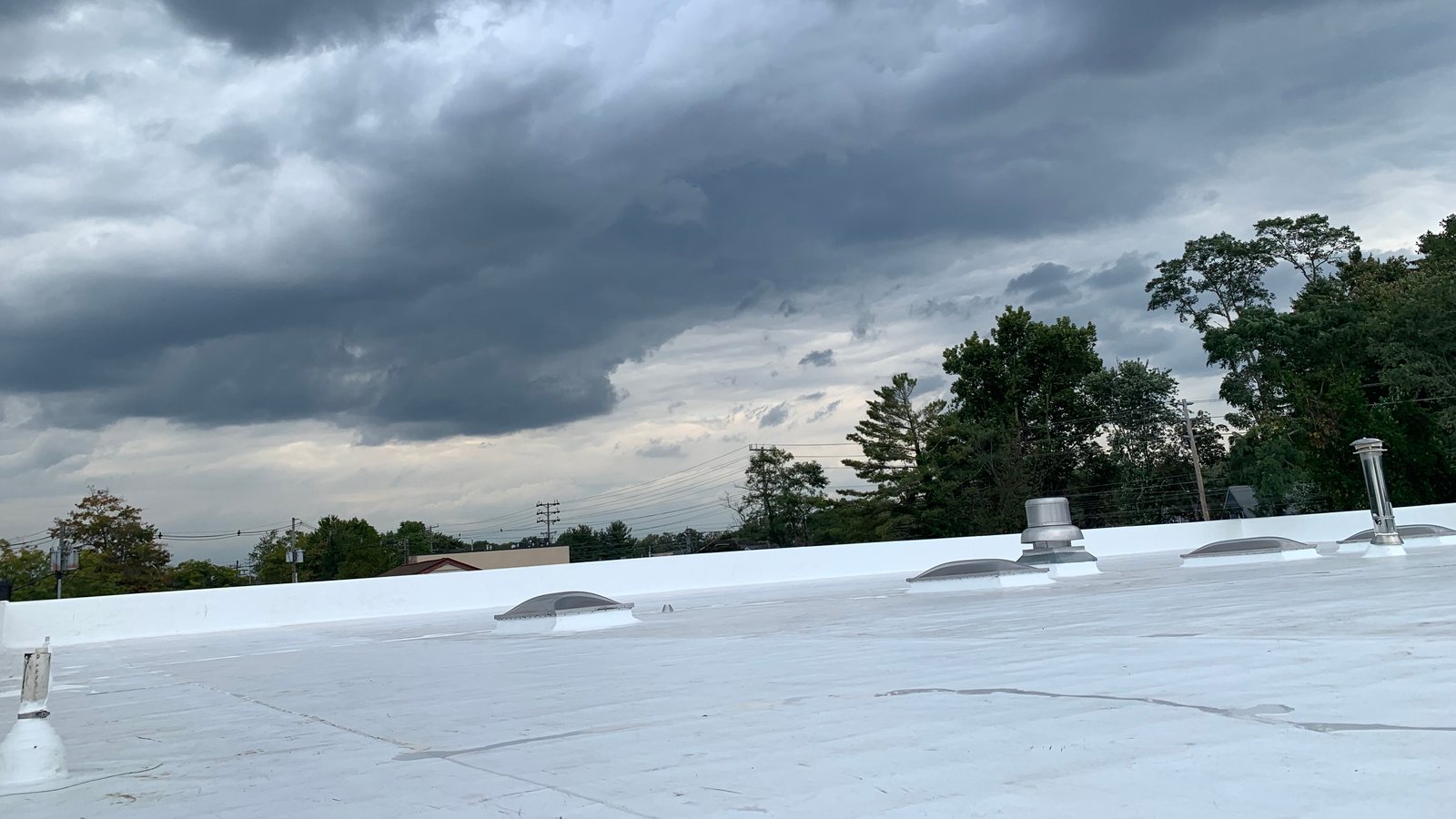
Short answer. Before the first snow, a commercial flat roof needs four things: every drain, scupper and gutter cleared; seams, flashings and penetrations checked for openings; rooftop units, curbs and panels secured; and a written snow plan that says who may go on the roof and how snow is removed. Most winter leaks on flat roofs start at a blocked drain or an open seam that was there in October.
Why winter is hard on flat roofs in New Jersey
Snow on a flat roof does not run off. It sits, melts in the afternoon and refreezes overnight. In New Jersey that freeze-thaw cycle can repeat many times a winter. Water that cannot reach a drain ponds, freezes, expands into any open seam and lets more water in on the next thaw. Add the weight of wet snow and ice, and a roof that was fine in summer can start leaking in January.
1. Clear every drain, scupper and gutter
- Interior drains: remove leaves and debris from the strainer basket, make sure the basket is in place and the drain flows. A missing basket lets debris into the leader, where it is harder to clear.
- Scuppers: clear the opening and check the leader head and downspout below. Ice forms first where water slows.
- Gutters and edge drainage: clear leaves after the last trees drop.
- Look for ponding stains: dirt rings on the membrane show where water sat last season. Those spots will hold water, then ice.
Our guide to where a flat roof actually drains explains each drainage type, and ponding water on a flat roof explains when standing water is a problem.
2. Check seams, flashings and penetrations
Walk the roof (safely, with fall protection where required) and look at:
- Field seams on single-ply membranes: any edge lifting, wrinkles or open laps.
- Perimeter and parapet flashing: loose termination bars, open corners, cracked sealant.
- Penetrations: pipe boots, vents and conduit supports. Sealant has a life span; check for cracks and gaps.
- Rooftop unit curbs: the flashing around each HVAC curb is one of the most common leak points.
- Punctures and cuts: often near units, where tools and screws are dropped during service visits.
Mark anything doubtful and have a roofer look before the first snow. Small openings are quick repairs in November and emergency calls in February. See commercial roof maintenance in NJ.
3. Secure rooftop equipment
- Access panels on units should be closed and fastened.
- Loose sheet-metal covers, signs and conduit should be secured; winter winds lift them.
- Equipment on sleepers or supports should sit on pads, not directly on the membrane.
4. Write a snow plan
Most winter roof damage is done by people, not by snow. Decide before the storm:
- Who may go on the roof, and that they know where drains, skylights and walkways are.
- When snow is removed, if ever. Many roofs never need it; some older or long-span roofs do. Ask a roofer or engineer about your building's load limits rather than guessing.
- How it is removed: plastic shovels, not metal; leave a layer of snow over the membrane; never chip ice off seams or flashings.
- Where snow goes: away from drains, not piled on one part of the roof, and never dumped over the edge onto walkways.
- Who to call if a leak appears.
5. Have it inspected if you are not sure
A professional inspection before winter covers drains, seams, flashing, penetrations, edge metal and the condition of the membrane itself, with photos. Read what a commercial roof inspection covers. If the roof is near the end of its life, it may be time to plan repair or replacement for spring rather than another round of patches.
Winter quirks by roof type
Most commercial flat roofs in Monmouth and Ocean counties are one of three systems, and each has its own winter weak spot:
- TPO and PVC (white single-ply). Welded seams are strong, but the membrane is thin. Dropped tools, shovels and foot traffic around units cause most punctures. In winter, look closely around HVAC curbs and walkways. See TPO roofing in NJ.
- EPDM (black rubber). Seams are taped or glued, and old seam tape can open as it ages and shrinks in the cold. Look along every lap, especially at corners. Our comparison of TPO vs EPDM explains the difference.
- Modified bitumen and built-up roofs. Blisters and cracks in the surface let water into the layers, where freeze-thaw cycles open them further. Look for soft or spongy areas and cracked flashing at walls.
Inside the building: signs to watch for
Leaks do not always show up where the water enters. In winter, watch for:
- New stains on ceiling tiles, especially near walls, columns and rooftop units.
- Drips at light fixtures or sprinkler heads.
- Rust streaks on steel deck or joists visible from inside.
- Musty smells in top-floor storage rooms.
- Icicles at the edge of a roof that should drain internally, a sign a drain is blocked.
Tell staff who to call when they see any of these, and photograph the spot with the date. Those photos help the roofer trace the leak back to its source.
If you are planning a replacement for spring
If the inspection shows a roof near the end of its life, use the winter to plan instead of patching again. Get a core survey, compare tear-off and recover options, and budget. Our guide to commercial flat roof replacement cost in NJ explains what drives the price, and commercial roof warranties explains what each warranty covers and what voids one. If a leak becomes urgent, read what to do in a flat roof leak emergency.
The small parts that cause big winter leaks
Most winter leaks on a flat roof start at a part, not in the open field. These are the names you will see on an inspection report or a bid, and what to check on each before the snow:
- Roof drain and strainer. The drain bowl, the clamping ring that holds the membrane into it, and the strainer basket on top. A loose clamping ring lets water run under the membrane at the lowest point of the roof.
- Scupper and leader head. The opening through the parapet and the box that collects water on the outside wall. Leaves pack in here every fall.
- Pitch pocket. A small metal pan filled with sealant around odd-shaped penetrations such as steel supports or bundled conduit. The filler shrinks and cracks with age and needs topping up.
- Roof curb. The raised frame a rooftop unit or skylight sits on. Its flashing has corners, and corners open first.
- Termination bar. The metal strip that holds the top edge of the membrane on a wall. Look for loose fasteners and sealant that has pulled away.
- Coping and edge metal. The metal cap on the parapet and the trim at the roof edge. Loose sections catch winter wind and can peel the membrane back.
- Expansion joint. On larger roofs, a raised flexible joint that lets the building move. Its cover can split in hard cold.
If a bid lists one of these parts and you are not sure what it is, ask the roofer to point it out on the roof or in a photo.
Keep a record of the fall check
Write down the date of each check, what was cleared, what was found and who fixed it, and keep the photos. A record helps in three ways. It shows a pattern if the same drain clogs every year. It gives the roofer a starting point when a leak appears in February. And many commercial roof warranties expect the owner to maintain the roof and report leaks promptly, so read your own warranty for its exact terms.
The checklist
| Item | Done before the first snow |
|---|---|
| Drains and strainers cleared and in place | |
| Scuppers, leader heads, downspouts clear | |
| Gutters cleared after leaf fall | |
| Seams and laps checked | |
| Parapet and edge flashing checked | |
| Penetrations and unit curbs checked | |
| Rooftop unit panels and loose items secured | |
| Snow plan written and shared | |
| Leak contact posted for staff |
Green Apple Roofing is a GAF Master Elite contractor and an NJ-registered Home Improvement Contractor #13VH11318100, serving commercial buildings across Monmouth and Ocean counties from our Ocean Township office. Request a free roof survey with no obligation through the commercial roofing page.
Questions building owners ask
Request a commercial roof survey.
We'll survey your roof, tell you honestly whether it needs repair, recover, or replacement, and give you an itemized bid you can actually compare. Same-day phone response.