
Soffit, Fascia and Rake Board: The Trim That Rots First on an NJ Roof
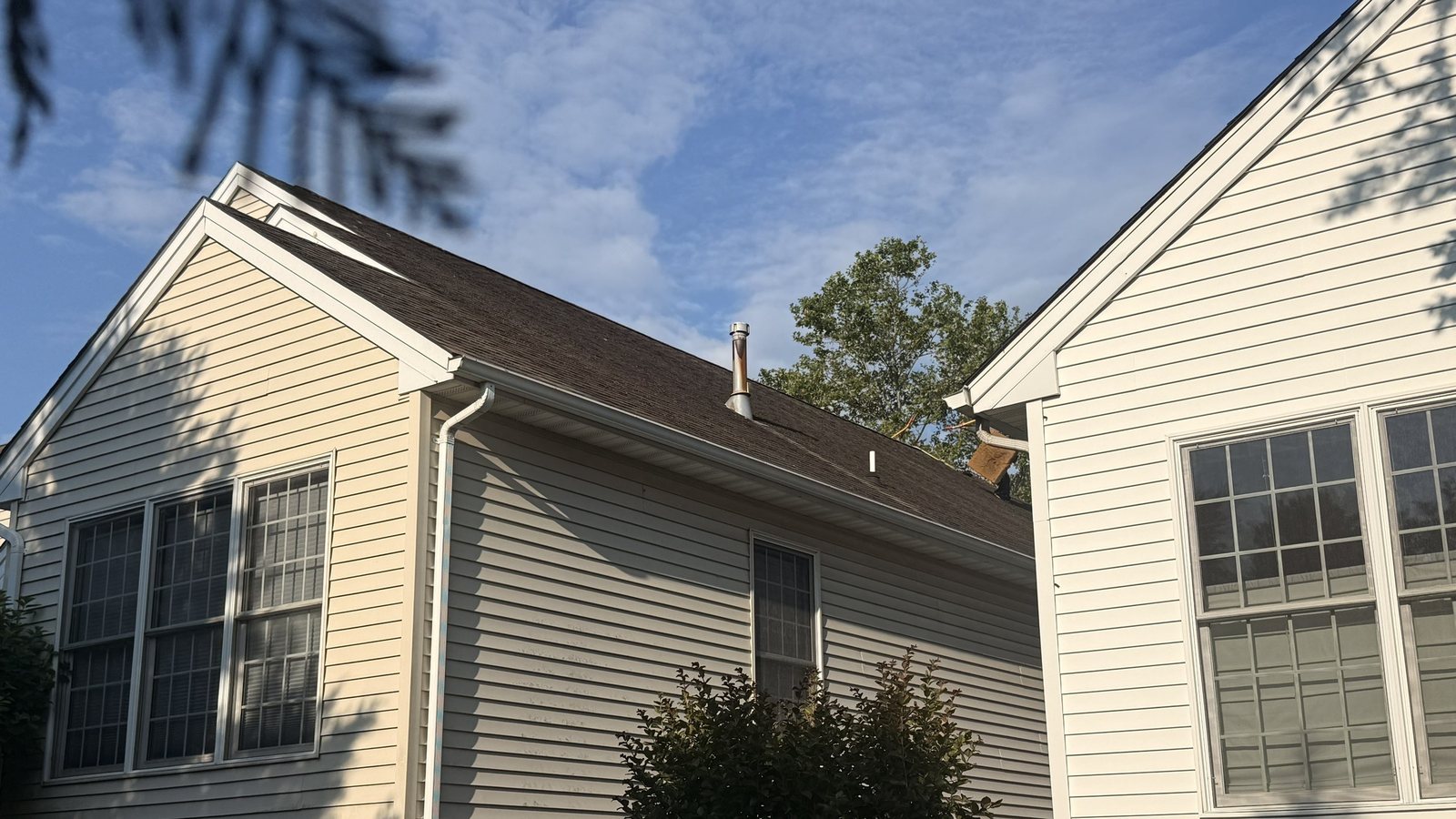
Short answer. Fascia is the board along the roof edge where the gutters hang; soffit is the underside of the overhang; rake boards run up the sloped gable ends. They rot first because they sit right where roof water runs off. Peeling paint, soft wood, sagging gutters and animals in the attic are warning signs. Small sections can be replaced; widespread rot usually means fixing the roof edge too.
What soffit, fascia and rake boards do
Look up at the edge of any New Jersey house and you will see three pieces of trim:
- Fascia. The vertical board along the bottom edge of the roof. Gutters are fastened to it. It closes off the ends of the rafters and supports the bottom row of shingles and the drip edge.
- Soffit. The horizontal panel under the overhang, between the fascia and the wall of the house. Vented soffit lets air into the attic.
- Rake board. The trim that runs up the sloped edges of a gable roof. It finishes the gable ends and protects the edge of the roof deck.
Together they close off the roof edge from weather, animals and insects, carry the gutters, and are part of how the attic breathes.
Why the trim rots before the roof
The roof sheds water toward its edges. Every drop that does not make it cleanly into a gutter ends up on the fascia, behind the gutter, or soaking into the soffit. Wood trim on many NJ houses is painted pine, and once the paint fails, it rots quickly.
The most common causes:
- Clogged or overflowing gutters. Water backs up behind the gutter and soaks the fascia. In winter, ice in the gutter does the same. See ice dams in NJ.
- Missing or short drip edge. Without a drip edge, water wicks around the edge of the shingles onto the top of the fascia and into the roof deck. Read decking, underlayment and drip edge.
- Failed paint. Bare wood absorbs water every time it rains.
- Poor attic ventilation. Warm, moist attic air condenses on the cold underside of the roof and soffit. See attic and roof ventilation.
- Shore weather. Along the Monmouth and Ocean county coast, wind-driven rain and salt air are harder on paint and wood.
Warning signs to look for
From the ground, with binoculars if you have them:
- Peeling, blistered or flaking paint on the fascia or rake.
- Dark stains or green growth on the trim.
- Gutters pulling away from the house or sagging.
- Soffit panels that sag, bulge or have fallen.
- Holes or gaps in the soffit, often chewed by squirrels or used by birds.
- Wasps' or birds' nests at the roof edge.
- Water stains on the siding below the roof line.
From a ladder or at a roof inspection:
- Wood that is soft when pressed with a screwdriver.
- Drip edge missing or bent.
- Rot that continues into the roof deck or rafter ends.
Animals in the attic are one of the most common ways people discover soffit damage. A sound in the ceiling at dusk often means an opening at the roof edge.
Repair or replace?
Small repairs
If the rot is in one short section, usually under a gutter downspout or a corner, that piece of fascia or rake board can be cut out and replaced, primed and painted or wrapped. Damaged soffit panels can be replaced in sections.
Full replacement of the trim
If rot is widespread, or the house has many painted wood boards that will keep failing, replacing the trim along the whole run is often the better value. Many homeowners choose low-maintenance materials:
- Aluminum fascia wrap over sound wood.
- PVC or composite trim boards that do not rot.
- Vinyl or aluminum soffit, often vented.
Wrapping rotted wood only hides the problem. The rot has to come out first.
When the trim is a roof problem
If rot runs into the roof deck or rafter ends, the fix goes beyond trim. The edge of the roof has to be opened, the damaged decking replaced, and a proper drip edge and ice and water barrier installed. If the roof is near the end of its life, it often makes sense to do the trim with the roof. Read roof repair in NJ and signs you need a new roof.
How trim work fits with gutters and roofing
The roof edge is one system: shingles, drip edge, fascia, gutter and soffit. Fixing one piece without the others often brings the problem back. When we look at a fascia problem, we look at the gutter pitch and fastening, the drip edge, the bottom rows of shingles, and the attic ventilation. Green Apple installs gutters and roofing, so the whole edge can be planned together.
Winter in NJ: why now
Fall leaves fill gutters in November. December and January bring freeze-thaw cycles and ice. Rotted fascia can let gutters pull off under the weight of ice, and open soffits invite animals looking for a warm attic. A roof-edge check before the worst of winter is cheaper than a gutter and fascia repair after it.
Simple maintenance that keeps trim sound
- Clean the gutters after the leaves fall and in spring.
- Make sure downspouts carry water away from the house.
- Repaint bare wood before it starts to soften.
- Keep trees trimmed back from the roof edge.
- Keep soffit vents clear and unblocked by insulation inside the attic.
- Have the roof edge checked when you have the roof inspected. See do you need a roof inspection in NJ.
What a soffit and fascia repair looks like, step by step
A typical roof-edge repair on a New Jersey house goes like this:
- Inspect. The roofer checks the fascia, soffit and rake boards, the gutters, the drip edge, the bottom rows of shingles and the attic side of the roof edge.
- Remove the gutter along the damaged section, so the fascia behind it can be seen and replaced.
- Cut out rotted wood. Damaged fascia and rake boards are removed back to sound wood, and any soft decking or rafter ends are found.
- Repair the structure if rot has reached the deck or rafter tails.
- Install new trim in wood, PVC or composite, then prime and paint or wrap it.
- Install or correct the drip edge so water drops into the gutter instead of onto the fascia.
- Replace soffit panels, with vents where the attic needs air.
- Rehang the gutter with the right pitch and fasteners, and check the downspouts.
On most houses this is a day or two of work for a section of the house, depending on how far the rot goes.
Signs the problem is really ventilation
Sometimes fascia and soffit rot even though the gutters work. If the underside of the roof deck near the eaves is dark or damp, if there is frost on the attic side of the roof in winter, or if paint peels on the soffit more than on the fascia, moist attic air may be the cause. Insulation pushed against the soffit vents is a common reason. Opening the vents with baffles and balancing intake and exhaust often stops the problem from returning.
Trim, siding and the look of the house
Trim is also what makes a house look finished. New fascia and soffit in a crisp color can change the look of a house as much as new shingles. If you are planning siding work too, doing the trim at the same time lets the colors and materials match. See vinyl vs fiber cement siding in NJ.
Why the roof edge matters to insurance and resale
Rotted trim and loose gutters are easy for an insurance inspector or a buyer's home inspector to see from the driveway. They are often read as a sign of how the rest of the house has been kept. A sound, painted or wrapped roof edge is one of the simplest ways to keep a house looking cared for, and to avoid a repair request at sale time.
Green Apple Roofing is a GAF Master Elite contractor and an NJ-registered Home Improvement Contractor #13VH11318100, serving Monmouth and Ocean counties from our Ocean Township office. Free roof survey, no obligation; we beat or match any legitimate quote.
Questions homeowners ask
Request a commercial roof survey.
We'll survey your roof, tell you honestly whether it needs repair, recover, or replacement, and give you an itemized bid you can actually compare. Same-day phone response.