
Rooftop Units and Foot Traffic: How HVAC Service Visits Wear a Commercial Roof
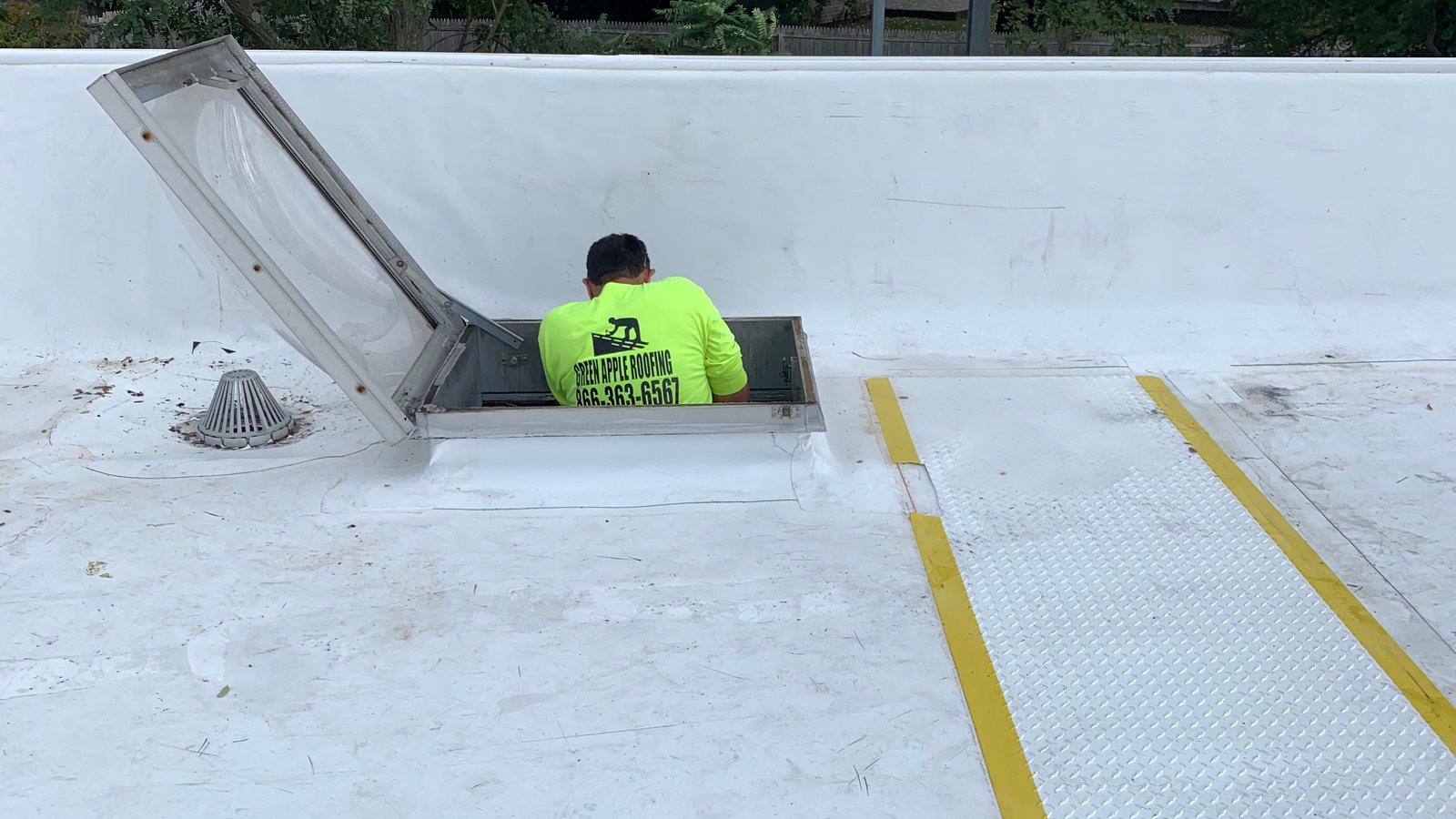
Short answer. Rooftop HVAC units wear a commercial roof in three ways: technicians walking and kneeling on the membrane, dropped tools and panels that puncture it, and the curbs, pipes and condensate lines around each unit. Walkway pads to every unit, protection at work areas, a simple contractor rule sheet and a check after each service visit stop most of this damage.
Why the roof around a rooftop unit fails first
On most commercial buildings in New Jersey, the heating and cooling equipment sits on the roof. Each unit is serviced several times a year: filter changes, seasonal start-ups, repairs. That means people, tools, ladders and replacement parts crossing the roof again and again, usually in a hurry and usually by technicians whose job is the equipment, not the roof.
Single-ply membranes such as TPO and EPDM are tough, but they are thin. A dropped screwdriver, a sharp screw, a panel set down on its edge, or a knee on a stone can be enough to cut or puncture them. The damage is often small, and small holes in a flat roof leak slowly into insulation for months before anyone sees a ceiling stain.
The six most common kinds of HVAC damage
1. Punctures and cuts
Dropped tools, loose screws from access panels, and sheet-metal edges cut membranes. Look within a few feet of each unit's access panels.
2. Worn paths
The same route from the roof hatch to each unit, walked for years, wears the membrane surface and crushes the insulation under it. On a white roof the path often shows as a grey track.
3. Curb flashing damage
Each unit sits on a curb, a raised frame with the membrane flashed up its sides. Technicians step on curb flashing, lean equipment on it, and pull at it when units are replaced. Open laps at curb corners are a common leak source.
4. Condensate and refrigerant lines
Condensate lines that drip onto the membrane, or lines run across the roof without proper supports, wear the membrane underneath them. Refrigerant oil leaks can damage some membranes.
5. Pipe and conduit supports
Gas lines and electrical conduit should sit on proper supports, not on wood blocks set directly on the membrane. Blocks rot, slide and wear through.
6. Unit replacement
When a unit is replaced, a crane sets the new one and the crew removes the old one. Curbs are adapted, flashings cut and reworked. A replacement that is not coordinated with the roofer is one of the most common causes of new leaks on an otherwise good roof.
What protects the roof
Walkway pads
Walkway pads are heavy, textured membrane pads welded or adhered along the routes people use: from the roof hatch or ladder to every unit, and around each unit's service side. They spread the load, protect against dropped tools and show technicians where to walk. Many membrane manufacturers specify walkway pads in high-traffic areas. Painted walkway lines mark the route but do not protect the membrane in the same way.
Protection at work areas
For bigger service jobs, a temporary protection board under work areas and tool drop zones stops punctures.
Proper pipe supports
Use roof supports made for the purpose, set on a protection pad, so lines do not sit on the membrane.
Correct curb heights and flashing
Curbs high enough for the finished roof and properly flashed make units easier to service without damaging the roof.
A simple rule sheet for HVAC contractors
Owners and property managers can post this at the roof hatch and send it to every service contractor:
- Walk only on the walkway pads.
- Set panels, screws and tools on a protection board, not on the membrane.
- Collect every screw and scrap before leaving.
- Do not cut, patch or seal the roof membrane. Report damage to the building manager instead.
- Do not run new lines across the roof without approved supports.
- Tell the building manager before any unit is replaced, so the roofer can coordinate the curb and flashing work.
Point 4 matters most. A well-meant patch with the wrong sealant or tape can void a membrane warranty and make the proper repair harder. See commercial roof warranties: what voids one.
Check the roof after every service visit
A short walk after each HVAC visit catches damage while it is still small:
- Look for screws, scraps and tools left behind.
- Look at the membrane around each unit's access panels for cuts and punctures.
- Check the curb flashing corners.
- Check under condensate lines for wear or ponding.
- Note anything new and call the roofer.
Twice a year, spring and fall, a roofer's inspection should include every curb, every penetration and the walkway routes. See commercial roof maintenance in NJ and commercial roof inspection in NJ.
What a membrane puncture costs if it is found late
A small puncture found the day it happens is a small repair. The same puncture found a year later often means wet insulation underneath, which has to be cut out and replaced, and sometimes interior repairs. Wet insulation spreads farther than the hole. See flat roof leak emergency for what to do once water is coming in.
Planning a roof replacement around rooftop units
When a flat roof is replaced, rooftop units often have to be lifted, disconnected or adapted. Good planning includes:
- coordinating with the HVAC contractor and scheduling the crane;
- raising curbs if the new insulation is thicker;
- adding walkway pads in the new specification from day one;
- deciding whether old, unused equipment should come off for good.
Read how a TPO roof is installed and commercial flat roof replacement cost in NJ.
Which buildings see the most HVAC wear
Not every commercial roof gets the same traffic. The roofs that wear fastest usually have:
- Many units. Retail strips, medical offices and restaurants often have one unit per tenant, so the roof is visited by several service companies.
- Restaurant exhaust. Kitchen exhaust fans put grease on the roof. Grease breaks down some membranes and makes the surface slippery. Grease guards or containment around exhaust fans protect the membrane.
- Older units. Equipment near the end of its life needs more service calls.
- No defined access route. When there is no walkway, every technician picks a different path.
If your building fits two or more of these, plan walkway pads and a twice-yearly inspection as standard.
Setting up a roof access log
A simple log at the roof hatch, or a sign-in in the building manager's office, helps connect damage to a visit. Record the date, the company, the technician and the units serviced. When a leak appears in March, the log shows who was on the roof in February. It also encourages service companies to take the rule sheet seriously, because their visits are on record.
Who pays when a service visit damages the roof
Service contracts often say little about roof damage. Owners and managers can add a clause that requires contractors to protect the roof, report damage, and pay for repairs caused by their work. Dated photos from routine inspections make those conversations easier, because they show the condition of the membrane before the visit.
Skylights and other rooftop features
Rooftop units are not the only things technicians walk past. Skylights, roof hatches, exhaust fans, vent stacks and satellite mounts all have flashings that can be stepped on or knocked. Skylights also carry a fall risk; many should have screens or guards. Keep walkway pads away from skylight curbs and mark the route clearly.
What to ask for in a roof replacement specification
If your roof is due for replacement, write HVAC protection into the specification from the start: walkway pads to every unit and hatch, curbs raised to suit the new roof height, proper supports for all lines, and grease containment at kitchen exhausts. These items cost far less on the day the roof is installed than added later, and they protect the investment from the first service visit onward.
Green Apple Roofing is a GAF Master Elite contractor and an NJ-registered Home Improvement Contractor #13VH11318100, serving Monmouth and Ocean counties from our Ocean Township office. Free roof survey, no obligation; we beat or match any legitimate quote. See commercial roof repair and commercial roofing.
Questions owners and managers ask
Commercial Roofing
Recover or Tear Off: When a New Membrane Can Go Over an Old Commercial Roof in NJ
ReadCommercial Roofing
How a TPO Roof Goes On: What the Crew Does From Tear-Off to the Last Seam
ReadCommercial Roofing
Getting a Flat Roof Ready for an NJ Winter: Drains, Seams and Rooftop Units Before the First Snow
ReadRequest a commercial roof survey.
We'll survey your roof, tell you honestly whether it needs repair, recover, or replacement, and give you an itemized bid you can actually compare. Same-day phone response.